

And What It Still Does to Design Education
In 1913, a small document appeared under the authority of the General Education Board, the vast philanthropic education organisation funded by John D. Rockefeller and shaped by Frederick T. Gates. It was called The Country School of To-Morrow. It was not presented as an instrument of social control. It was presented as a dream. Its subtitle promised a school in which “young and old” would be taught practical ways to make rural life “beautiful, intelligent, fruitful, recreative, healthful, and joyous.” It spoke of health, food, shelter, clothing, sanitation, farming, drawing, music, recreation, landscape, community, cooperation and beauty. It imagined the school not as a dead room with desks and discipline, but as a living organism rooted in the whole territory of rural life.
At first glance, it sounds almost like a lost progressive manifesto. A school without walls. A school where the kitchen, barn, dairy, orchard, stream, forest, workshop and field become laboratories. A school where the horizon becomes the wall of the museum and the sky its roof. A school where children are not chained to benches but learn by doing, observing, making, cooking, planting, repairing, singing, drawing, dancing and helping one another. A school where health comes before examination. A school where beauty is not an ornament but a necessity of life.
But hidden inside this dream is one of the most revealing sentences in the history of modern education:
“We shall not try to make these people or any of their children into philosophers or men of learning or of science.”
Then Gates continues. They are not to be made into authors, orators, poets or men of letters. They are not to be searched for as embryo artists, painters or musicians. Nor even, he says, should the reformers cherish the “humbler ambition” of raising up lawyers, doctors, preachers, politicians or statesmen. There are already enough of those. The task is not to open the highest doors of civilisation to rural children. The task is to train them “as we find them” for an ideal life “just where they are.”
That is the sentence that matters.
Not because one sentence explains every problem in modern education. It does not. Not because Rockefeller personally designed every timetable, every school building, every grading system, every curriculum pathway and every deadening meeting that followed. History is never that neat. But because the sentence says aloud what modern education has often hidden beneath kinder language: some children are not being invited into the full inheritance of human possibility. They are being improved for usefulness. They are being made healthier, more efficient, more productive, more orderly, more cooperative, perhaps even happier — but within a horizon that has already been chosen for them.
This is the Rockefeller Education Trap.
The trap is not simply that schooling makes workers. That is too crude. The deeper trap is that education can appear humane while quietly limiting destiny. It can feed the child, heal the child, house the child, clothe the child, improve the child, entertain the child, even beautify the child’s surroundings, while still refusing to ask whether that child might become a thinker, artist, scientist, poet, philosopher, inventor or leader. It is education as uplift without emancipation. It is benevolence with a ceiling.
The story begins before the 1913 pamphlet. Rockefeller’s General Education Board was incorporated in the early twentieth century to promote education in the United States. Its language was broad and philanthropic. Its work was energetic, practical and large-scale. It helped modernise rural education, supported higher education, invested in medical schools, helped develop agricultural demonstration programmes, supported Black education within the brutal limits of the segregated South, and encouraged the spread of public secondary schooling in regions where it had barely existed. The Board did not merely hand out money. It shaped priorities. It funded demonstration. It created models. It rewarded certain directions. It helped persuade localities, states and institutions that education should become more systematic, efficient, modern, scientific and economically useful.
This matters because power rarely operates only by command. It operates by funding the possible.
A grant does not need to order a nation to obey. It only needs to make some futures easier to build than others. It supports one kind of school, one kind of research, one kind of teacher training, one kind of curriculum, one kind of success story. It makes one educational philosophy look practical and another look sentimental. It makes one reform scalable and another marginal. It gives administrators a language. It gives politicians evidence. It gives universities incentives. It gives schools a model to imitate. Slowly, without needing a single villain in a dark room, a system begins to form.
The General Education Board’s rural programme belonged to a wider Progressive Era culture that believed deeply in expertise, measurement, efficiency, administration, social improvement and scientific management. This was the age of Frederick Winslow Taylor’s industrial efficiency, the rise of large bureaucracies, the growth of mass secondary education, the professionalisation of social work, the expansion of public health, the spread of agricultural extension, and the emergence of education as an object of system design. Reformers looked at poverty, disease, rural isolation, illiteracy and weak schools and believed they could be corrected through organised expertise. They were often right about the suffering. They were often right about the neglect. But they were not always right about freedom.
This is the double character of The Country School of To-Morrow. It is both humane and paternalistic. Both visionary and limiting. Both anti-classroom and pro-management. Both beautiful and dangerous.
Gates begins with the ugliness of the rural schoolhouse. He describes small one-room buildings on pegs, weather-blackened walls, smashed windows, broken entrance steps, lockless doors, stove-pipes pushed through the side, and furniture that seems designed as an “engine of torture.” This opening is important. Gates understands that education is environmental. A schoolhouse is not neutral. A broken building teaches a lesson before the teacher speaks. It tells the child what society thinks they are worth. It tells them whether beauty belongs to them. It tells them whether they are being welcomed into dignity or merely stored for a few hours.
This is a lesson modern design education should never forget. The studio, the workshop, the lecture room, the corridor, the library, the screen, the timetable, the critique wall, the light, the sound, the temperature, the chair, the smell of ink, the availability of tools, the distance between teacher and student — all of these teach. The hidden curriculum begins in space. If the design studio becomes a computer lab with dead lighting and no materials, it teaches that design is screen production. If the workshop is underfunded, it teaches that hand knowledge is obsolete. If the walls are empty, it teaches that visual culture is decoration. If the critique space is hostile, it teaches that judgement is humiliation. If the timetable fragments studio time into administrative crumbs, it teaches that deep work is not valued.
Gates sees environment. That is one of the reasons his document remains powerful.
He then turns to health. The Rockefeller Sanitary Commission’s work on hookworm disease appears as evidence of the bodily crisis of rural childhood. Gates describes children weakened, pale, listless, stunted physically and mentally by disease and neglect. He argues that education must begin with health. Food, cooking, sanitation, ventilation, drainage, water supply, infection, clothing, eyesight, teeth, digestion, sex, infancy and age all become part of the educational programme. He refuses the false separation between schooling and the body.
This is where Gates comes close to Margaret McMillan.
McMillan, working in Britain, understood that poor children could not be educated as disembodied minds. She fought for school meals, medical inspection, open-air nurseries, clinics, cleanliness, outdoor play, rest, care and beauty. She understood that imagination cannot flourish in a neglected body. A hungry child is not a failed learner. A sick child is not an underperforming data point. A cold child is not lacking aspiration. Education begins when life becomes habitable.
This should be central to contemporary design education. We speak constantly about creativity, innovation and employability, but often ignore exhaustion, anxiety, housing insecurity, loneliness, debt, screen fatigue, poor nutrition, lack of sleep and the collapse of studio belonging. Then we wonder why students struggle to take creative risks. A burnt-out student cannot become Feynman. A student living inside permanent assessment fear cannot develop judgement. A student who has no time to wander, read, draw, fail, talk, cook, sleep, look, listen and return cannot build an inner life. The future of design education begins with the conditions in which perception becomes possible.
Gates’s most radical educational move is to dissolve the boundary of the school. He imagines the entire township as the school ground. Every industry in the district becomes part of the curriculum. Every kitchen, barn, dairy and shop becomes a laboratory. Crops, orchards, gardens, forests, streams, animals and farm tools become scientific equipment. Learning is not something delivered in abstraction. It emerges from the life immediately around the child.
This is a profound idea. It is also the foundation of serious design education. Design cannot be learned only through lectures about design. It must be learned through contact with materials, bodies, places, users, publics, histories, constraints, failures and consequences. The city is a studio. The street is a typography lesson. The market is a lesson in colour, signage, desire and class. The bus stop is service design. The hospital waiting room is emotional design. The phone interface is behavioural design. The protest banner is visual rhetoric. The family kitchen is systems design. The museum is memory design. The cemetery is information architecture. The school itself is an interface between power and becoming.
A real design education turns the world into a readable text and a workable material.
But again, in Gates, the world-as-school is tied to social containment. He does not say that the world should open the child into the fullness of knowledge. He says the child should be trained for rural life “just where they are.” Place becomes both root and boundary. The educational question becomes not “What might this child become?” but “How can this child be made more capable within the social and economic position already assigned?”
This is the trap.
A good school gives roots and wings. A trapped school gives only roots and calls it belonging.
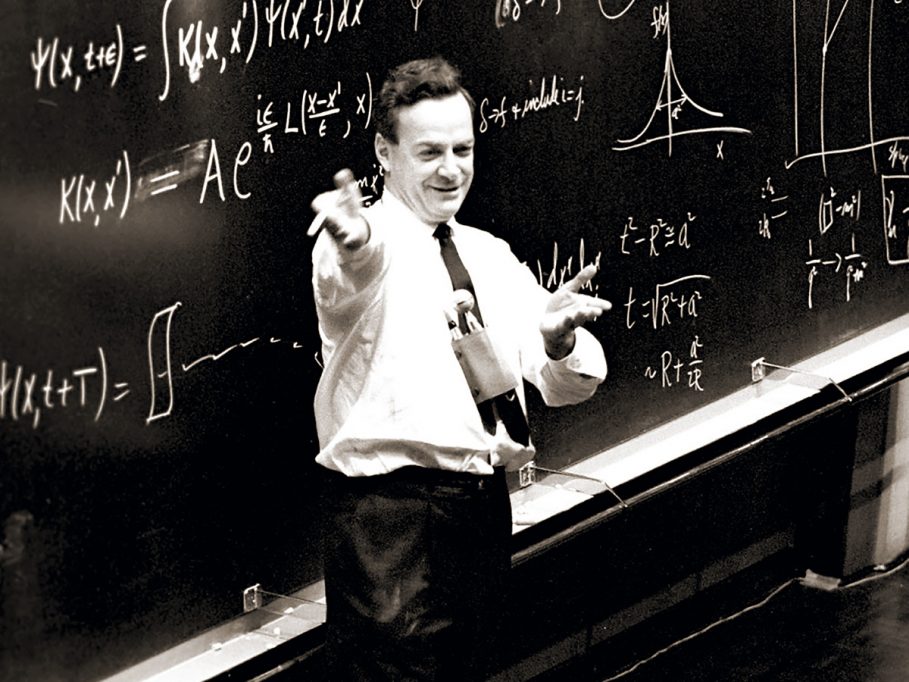
This is why the Feynman story matters.
Richard Feynman did not fit neatly into the sorting machine. His school IQ was recorded as 125, which his biographer James Gleick describes as “merely respectable.” Columbia rejected him. He attended Far Rockaway High School in Queens, a school that would later be associated with three Nobel laureates: Feynman himself, Burton Richter and Baruch Blumberg. The system did not recognise what it had in front of it in any simple, reliable way. The labels were inadequate. The measures were crude. The gates were not neutral. Columbia’s rejection was not a pure judgment of capacity; it belonged to a world of quotas and social barriers. The sorting machine sorted, but it did not necessarily understand.
Feynman escaped because his deepest education happened before and beyond the official system. His father, Melville Feynman, an immigrant who worked in the uniform business, taught him a lesson more powerful than credential culture: knowing the name of something is not the same as knowing the thing. A child can learn the name of a bird in many languages and still know nothing about the bird. What matters is what the bird does, how it moves, how it lives, how it behaves, what can be observed, questioned, tested and understood.
That is not merely a charming anecdote. It is an entire philosophy of education.
The bureaucratic school teaches names. The living school teaches attention.
The bureaucratic school teaches categories. The living school teaches phenomena.
The bureaucratic school teaches performance. The living school teaches understanding.
The bureaucratic school asks whether the student can repeat the approved answer. The living school asks whether the student can find out what is really going on.
Feynman’s genius was not simply a matter of raw intelligence. It was a way of relating to reality. He had an almost moral impatience with empty explanation. He disliked pretence. He distrusted authority when authority replaced understanding. He wanted to know what was happening underneath the words. This is why he became not only a physicist but a model of intellectual honesty. He shows us that real education is not the accumulation of correct phrases. It is the formation of a mind that refuses to be satisfied with phrases.
Design education needs this lesson desperately.
A student can know the name of Bauhaus and know nothing about modernism. A student can know the name of Helvetica and know nothing about typography. A student can know the word “semiotics” and know nothing about signs. A student can say “human-centred design” and know nothing about human beings. A student can create a moodboard and know nothing about research. A student can prompt an AI image generator and know nothing about composition, authorship, visual culture, labour, copyright or desire. A student can write “brand strategy” on a slide and know nothing about markets, mythology, trust or manipulation.
Names are not knowledge.
The Feynman test for design education would be brutal and beautiful. Do not ask students whether they know the terminology. Ask whether they can see. Ask whether they can explain what is happening in a poster, a street, a screen, a ritual, a brand, a hospital, a classroom, a political campaign, a food package, a type system, a queue, a map, a border crossing, a prayer book, a social media feed. Ask whether they can move from surface to structure. Ask whether they can detect the difference between polish and intelligence. Ask whether they can notice the false assumption inside the brief. Ask whether they can draw what they saw, not what they expected to see. Ask whether they can make, test, listen, revise and understand.
That is education.
The Rockefeller trap is not that practical education is bad. Practical education is essential. Gates is right to bring food, clothing, shelter, farming, sanitation, tools, making, recreation and beauty into the curriculum. The problem is not practice. The problem is practice without intellectual freedom. The problem is practical education designed to keep people useful rather than make them free.
This distinction is crucial for design education because design has always lived between liberation and service. It belongs to industry and to imagination. It belongs to commerce and to culture. It belongs to the client and to the public. It belongs to craft and to technology. It belongs to production and to critique. It can humanise the world or decorate systems of harm. It can clarify truth or make lies seductive. It can serve democracy or manipulate attention. It can make life more beautiful or more obedient.
For this reason, design education cannot be reduced to training. A designer who is only trained becomes a technician of other people’s assumptions. A designer who is educated can question the assumptions.
The twentieth century repeatedly tried to bring design into alignment with industry. Sometimes this produced extraordinary things. The Bauhaus, for example, understood the workshop as a place where art, craft, technology and modern life could meet. It refused a purely academic art education. It insisted on making. It placed material, form, colour, space and production at the centre. But even the Bauhaus was not simply vocational. At its best, it was a philosophical experiment in living, perception, social form and modernity. It asked what kind of world industrial society might build, and whether artists and designers could shape that world intelligently.
The danger comes when the workshop survives but the philosophy disappears. Then design education becomes a production pipeline. Students learn outputs without origins. They learn software without judgement. They learn branding without culture. They learn UX without ethics. They learn employability without citizenship. They learn presentation without substance. They learn how to appear professional before they have learned how to think.
This is the modern form of the Gates sentence.
No one now says openly: “We shall not make these students philosophers.” Instead, the institution says: “We need to make them industry-ready.”
No one says: “We shall not make them artists.” Instead, the institution says: “They need to meet market demand.”
No one says: “We shall not make them scientists.” Instead, the institution says: “They do not need research depth at this level.”
No one says: “We shall not make them poets.” Instead, the institution says: “The module is about practical skills.”
No one says: “We shall not make them leaders.” Instead, the institution says: “They need to be realistic.”
But the effect is similar. The horizon narrows. The student is trained for the existing world instead of educated to transform it.
This is why John Taylor Gatto remains so uncomfortable and necessary. Gatto spent his life distinguishing schooling from education. He argued that compulsory schooling often teaches more through its hidden curriculum than through its official subjects. It teaches obedience, dependency, emotional submission, ranking, surveillance, fragmentation and the habit of waiting for permission. Whether one agrees with every historical claim Gatto made is less important than the wound he exposed. He understood that the real curriculum of school may not be mathematics or literature or science. It may be the shaping of the self into something manageable.
Design education has its own hidden curriculum.
A student enters a design course believing they are studying typography, image-making, illustration, motion, branding, interaction, advertising or visual communication. But beneath the official curriculum they may be learning other lessons. They may learn that speed matters more than depth. That style matters more than thought. That the screen matters more than the hand. That software matters more than seeing. That employability matters more than formation. That feedback means compliance. That critique means danger. That research means collecting references. That originality is risky. That theory is a burden. That craft is nostalgic. That history is optional. That ambiguity should be resolved quickly. That failure should be hidden. That the portfolio is not a record of becoming but a sales brochure for approval.
That hidden curriculum is not neutral. It forms the designer.
And once formed in this way, the designer enters the world ready to serve systems they do not understand. They can produce a logo for a company whose ethics they have not examined. They can make an interface addictive without understanding addiction. They can design a campaign that manipulates insecurity while calling it engagement. They can generate images without understanding visual culture. They can produce “content” without asking what kind of attention economy they are feeding. They can sit in a meeting and allow the credential, the hierarchy, the job title or the KPI to defeat the person who actually understands the problem.
That meeting was not literally designed in 1906. But the logic behind it belongs to the same administrative century. The credential beats understanding. The role beats competence. The approved language beats reality. The person who can name the bird wins over the person who has watched the bird.
This is the deeper relevance of Feynman.
Feynman stands for the person who looks again. He stands for the refusal to confuse status with understanding. He stands for the amateur spirit inside expert practice: the willingness to ask naive questions because reality matters more than appearing intelligent. Design education needs that kind of irreverence. It needs students who are not afraid to ask why a brief exists. Why a brand needs to be persuasive. Why an interface wants more attention. Why a campaign has chosen that body, that accent, that colour, that metaphor, that silence. Why a system calls itself inclusive while excluding certain people. Why a school claims creativity while destroying the conditions for creative life.
Without that kind of questioning, design becomes the aesthetic department of obedience.
The General Education Board’s dream school is not without beauty. In fact, one of the most fascinating things about the Gates document is how seriously it takes beauty. It calls for music, orchestra, band, chorus, dancing, drawing, landscape, flowers, recreation and libraries. Gates says beauty in sight and sound is fundamental, almost as deep as hunger. He sees drawing as a means of close observation, analysis and recognition. This is extraordinary. He understands that beauty is not a luxury reserved for elites. He wants rural children to have access to harmony, movement, grace and visual pleasure.
This is where the document becomes especially complicated for us.
Because the same text that limits aspiration also honours beauty more fully than many contemporary schools. The same text that says rural children should not become philosophers also insists that they should draw, sing, dance and live among flowers. The same text that is paternalistic also condemns the traditional school as a place of forced confinement and physical and mental torture. The same text that trains people “as we find them” also argues that the school should become pleasurable enough that the child cannot distinguish between work and play.
We must resist the temptation to make history too simple.
Gates is not merely a villain. Rockefeller is not merely a cartoon capitalist pulling levers behind every classroom. The General Education Board did not only harm; it also funded real improvements, medical education, rural schools, agricultural extension and public health initiatives. The trap is subtler. It is precisely because the reform was mixed with genuine care that it became powerful. It is precisely because the school of tomorrow was beautiful that its limiting assumptions need to be examined.
The most dangerous educational systems are not always cruel on the surface. They may be kind, well-funded, progressive, efficient, inclusive, data-rich, attractive and full of good intentions. The question is whether they enlarge the human being or merely optimise the human being for a pre-existing system.
This question now faces art and design schools with new urgency.
For decades, design education has been pressured to justify itself economically. Universities ask programmes to prove employability. Governments ask creative courses to demonstrate measurable return. Parents ask whether design is a real career. Students ask whether the degree will produce work. Industry asks for graduates who can fit immediately into teams. Software companies shape the curriculum by shaping the tools. AI platforms now promise to automate what used to take time, practice and judgement. Under such pressure, the art school becomes anxious. It tries to look useful. It trims what seems slow. It reduces history. It compresses theory. It cuts workshop time. It replaces drawing with digital production. It replaces intellectual risk with professional polish. It starts to produce students who can deliver but cannot yet discern.
This is a disaster for design.
The world does not need more visually competent obedience. It does not need more brand technicians, prompt operators, deck polishers, template managers and interface decorators. It needs designers who can understand systems, histories, materials, cultures, signs, myths, bodies, technologies and power. It needs designers who can ask what should not be designed. It needs designers who can tell the difference between innovation and extraction. It needs designers who understand that beauty can heal, deceive, dignify or seduce. It needs designers who can work with AI without surrendering judgement to it. It needs designers who can make things slowly enough to know what they are making.
This means design students must become philosophers.
Not academic philosophers necessarily, but people who can ask what a thing is, what it assumes, what it values, what it excludes, what kind of life it makes possible and what kind of human being it imagines.
They must become scientists.
Not laboratory scientists necessarily, but people who can observe, test, compare, analyse, investigate, doubt, revise and respect evidence.
They must become poets.
Not decorative poets necessarily, but people who understand metaphor, rhythm, silence, atmosphere, ambiguity, emotional truth and the density of language.
They must become artists.
Not isolated geniuses necessarily, but people able to give form to perception, feeling, memory, contradiction and possibility.
They must become citizens.
Not merely consumers of opportunity, but people with responsibility for the shared world their work enters.
This is the sentence the New Art School must write against Gates:
We shall try to make them philosophers. We shall try to make them people of learning. We shall try to make them scientists, artists, poets, makers, critics, citizens and leaders. Not because every student will become famous. Not because every student will become a genius. But because every student deserves the full horizon of human possibility.
Margaret McMillan helps us imagine this without falling into elitism. Her work reminds us that intellectual freedom cannot be separated from bodily care. She did not begin with the fantasy of the isolated genius. She began with children who needed food, air, cleanliness, play, health, protection and love. But she did not interpret care as containment. Care was the foundation for unfolding. The poor child did not deserve a poorer curriculum. The sick child did not deserve a smaller imagination. The working-class child did not deserve merely useful training. The child deserved the conditions in which the whole person could grow.
That is the missing piece in Gates.
He saw the need for health, beauty and practical life. But he did not fully grant the child the right to exceed the category assigned to them.
Feynman exceeded the category.
He exceeded the IQ number. He exceeded the rejection. He exceeded the institutional gate. He exceeded the idea that knowing names is knowledge. He exceeded the social expectation of the respectable path. He became a physicist not because the system perfectly identified him, but because his curiosity survived classification. His father did not give him a credential. He gave him a way of seeing.
This is exactly what design education must give.
A way of seeing.
Not merely a set of skills. Not merely software literacy. Not merely industry readiness. Not merely a portfolio. Not merely a degree. A way of seeing.
A way of seeing when a visual system has become propaganda. A way of seeing when convenience has become control. A way of seeing when a brand has turned insecurity into profit. A way of seeing when an interface is shaping desire. A way of seeing when an institution uses the language of creativity while destroying creative time. A way of seeing when AI is being used to avoid the difficult work of judgement. A way of seeing when beauty is being used as camouflage. A way of seeing when the problem is not the design, but the world that asked for it.
The old trap was rural containment. The new trap is professional containment.
The old trap said: remain on the farm, but become healthier and more efficient.
The new trap says: enter the industry, but do not disturb its assumptions.
The old trap said: we shall not make philosophers.
The new trap says: theory is not employable.
The old trap said: we shall not search for embryo artists.
The new trap says: AI can make the images.
The old trap said: mind not high things.
The new trap says: be realistic.
But realism without imagination is submission.
The future of design education must refuse this. It must recover the studio as a place of formation. It must insist that making is thinking. It must restore drawing as a discipline of attention, not a nostalgic exercise. It must restore typography as language made visible, not software arrangement. It must restore printmaking, bookmaking, photography, moving image, coding, writing, performance, sound, material experimentation and public engagement as ways of thinking with the world. It must restore theory as protection against manipulation. It must restore critique as a shared search for truth, not a ritual of humiliation. It must restore history as memory against the arrogance of the present. It must restore beauty as a serious human need. It must restore health, time, food, conversation, walking, reading, field trips, silence, failure and joy as educational infrastructure.
This is not anti-industry. It is anti-reduction.
Students do need to work. They need livelihoods. They need professional confidence. They need to understand clients, budgets, deadlines, production, collaboration, negotiation, presentation and delivery. But employability must be the floor, not the ceiling. A design school that produces employable graduates but not free human beings has failed. It has simply made the Gates sentence polite.
The relationship between education and work must be reversed. We should not ask how much of education can be reduced to employability. We should ask what kind of work becomes possible when students are genuinely educated. A deeply educated designer will be more employable in the long run, not less, because they can think across contexts, adapt with judgement, communicate with substance, ask better questions and resist becoming obsolete when tools change. Tool training expires. Judgement compounds.
This is especially urgent in the age of AI.
AI will make the Gates trap more seductive because it can produce the appearance of competence without the formation of competence. It can generate images before the student has learned to see. It can produce copy before the student has learned to think. It can create layouts before the student has learned proportion. It can mimic research before the student has encountered reality. It can produce a portfolio before the student has had a journey.
The danger is not that AI will destroy creativity. The danger is that institutions will use AI to avoid educating creativity. They will mistake outputs for formation. They will reward speed over understanding. They will teach students to command machines without developing the inner authority to judge what the machine gives back. They will create a generation of designers who can generate endlessly but cannot decide meaningfully.
Feynman is the antidote to that.
He reminds us that the answer is not enough. The method matters. The understanding matters. The contact with reality matters. The ability to ask “how do we know?” matters. The refusal to fool oneself matters. Design education must build this refusal into its bones.
The Reece Committee hearings of the 1950s, whatever one makes of their politics and conclusions, reveal that anxiety about foundation influence did not disappear. Americans continued to worry that unelected philanthropic power could shape education, public opinion and institutional life beyond democratic scrutiny. Earlier Senate criticisms of philanthropic influence, including remarks associated with Senator Chamberlain in 1917, belong to the same wider concern. The question was not only whether foundations gave money. The question was whether private wealth could silently determine public direction.
That question remains alive.
Today the shaping power may come from philanthropy, technology companies, rankings, accreditation, government metrics, private platforms, industry partnerships, recruitment markets, employability data or AI infrastructure. The names change. The structure remains. Education is constantly being invited to serve the priorities of power while calling that service relevance.
This is why design education must cultivate institutional courage.
It must be willing to say no. No to shallow employability. No to tool worship. No to AI as shortcut around formation. No to the collapse of studio culture. No to assessment systems that reward predictable outcomes. No to industry partnerships that turn students into unpaid trend scouts. No to the removal of history, theory, drawing and craft. No to the idea that poor or first-generation or international or vocationally anxious students deserve a narrower education. No to the assumption that practical students do not need philosophy. No to the idea that creativity can be delivered through templates.
A real design school is not a finishing school for the creative industries.
It is a place where perception is sharpened, judgement is formed, courage is practised, beauty is studied, tools are mastered, histories are argued with, materials are respected, communities are encountered, and the student gradually becomes capable of making work that has consequence.
The Gates document remains on the shelf because it is not only a historical artefact. It is a mirror. It shows us a reformer who saw the deadness of school more clearly than many contemporary reformers. It shows us a philanthropist’s world in which health, beauty, farming, craft, recreation and social life belonged in education. It shows us a critique of the classroom as a place of confinement. It shows us an early dream of experiential learning, community schooling and embodied curriculum.
But it also shows us the ceiling.
It shows us what happens when education is designed for people rather than with them. It shows us the danger of care without freedom. It shows us the danger of beauty without emancipation. It shows us the danger of practical education that does not open the highest forms of thought to everyone. It shows us the old habit of deciding, in advance, who should become fully intellectual and who should become merely useful.
The New Art School must take the living parts and reject the dead ones.
It should keep health as the first lesson. It should keep the world as curriculum. It should keep the studio without walls. It should keep drawing as close observation. It should keep the kitchen, workshop, street, garden, library, museum, market and field as sites of learning. It should keep music, dance, recreation, beauty and craft. It should keep the belief that education is not merely preparation for life, but the redesign of life itself.
But it must reject the molding hand.
It must reject docility.
It must reject the predetermined horizon.
It must reject the sentence that says some children will not become philosophers.
Because every design student is already dealing with philosophical material. Every design student is asking what kind of world will be made visible, desirable, usable and believable. Every design student is shaping attention. Every design student is participating in the construction of culture. To deny them philosophy is to make them unconscious philosophers in service of someone else’s worldview.
The boy who escaped the trap did not escape because he was recognised by the system. He escaped because he learned how to look past names. He learned that understanding is not the same as approval. He learned that curiosity can outrun classification. He learned that reality is more interesting than the label placed upon it.
That is what design education must now protect.
The document was published in 1913. The system it belongs to is still running wherever credentials beat understanding, wherever rubrics beat judgement, wherever employability beats education, wherever tools beat thought, wherever outcomes beat process, wherever professional polish beats truth, wherever students are prepared for the world without being invited to transform it.
The meeting you sat in last week, where the credential beat the engineer who actually understood the problem, was not literally built by Frederick Gates. But it belongs to the same civilisation of sorting. The same civilisation that loves labels more than knowledge. The same civilisation that confuses authority with understanding. The same civilisation that can produce schools full of activity and still fail to recognise genius.
The answer is not nostalgia. The answer is not conspiracy. The answer is a more demanding form of education.
One that begins with health but does not end with usefulness.
One that teaches tools but refuses tool worship.
One that prepares students for work but does not reduce them to workers.
One that values practice but insists on thought.
One that loves beauty but links beauty to freedom.
One that uses AI but refuses to outsource judgement.
One that understands that every child, every student, every designer, carries a possibility greater than the category assigned to them.
In 1913, Gates wrote: “We shall not try to make these people or any of their children into philosophers or men of learning or of science.”
The New Art School must answer:
We shall try.
We shall try to make designers who can think.
We shall try to make designers who can see.
We shall try to make designers who can question.
We shall try to make designers who can make with hand, heart and eye.
We shall try to make designers who know that the name of the bird is not the bird.
We shall try to make designers who understand the world deeply enough to refuse its stupid instructions.
We shall try to make designers who are not merely employable, but awake.
And perhaps that is the education trap finally broken: not when the student escapes school, but when the school stops trying to keep the student smaller than their possible life.
References and Further Reading
Frederick T. Gates, The Country School of To-Morrow, Occasional Papers No. 1, General Education Board, New York, 1913.
General Education Board, The General Education Board: An Account of Its Activities, 1902–1914, New York, 1915.
Alexander James Inglis, Principles of Secondary Education, Boston and New York: Houghton Mifflin, 1918.
National Education Association, proceedings and resolutions relating to secondary, vocational and industrial education, especially debates around 1915.
Congressional Record, United States Senate, 1917, remarks associated with Senator George E. Chamberlain on philanthropic foundations and public influence.
B. Carroll Reece Committee, Final Report of the Select Committee to Investigate Tax-Exempt Foundations and Comparable Organizations, U.S. House of Representatives, 1954.
James Gleick, Genius: The Life and Science of Richard Feynman, New York: Pantheon, 1992.
Richard P. Feynman, Ralph Leighton and Edward Hutchings, “Surely You’re Joking, Mr. Feynman!”: Adventures of a Curious Character, New York: W. W. Norton, 1985.
Richard P. Feynman and Ralph Leighton, What Do You Care What Other People Think? Further Adventures of a Curious Character, New York: W. W. Norton, 1988.
Richard P. Feynman, Robert B. Leighton and Matthew Sands, The Feynman Lectures on Physics, Addison-Wesley, 1964.
John Taylor Gatto, Dumbing Us Down: The Hidden Curriculum of Compulsory Schooling, New Society Publishers, 1992.
John Taylor Gatto, The Underground History of American Education: A Schoolteacher’s Intimate Investigation Into the Problem of Modern Schooling, Oxford Village Press, 2000.
John Taylor Gatto, “Against School,” Harper’s Magazine, September 2003.
Margaret McMillan, Education Through the Imagination, London: Swan Sonnenschein, 1904.
Margaret McMillan, The Child and the State, London, 1911.
Margaret McMillan, The Nursery School, London: Dent, 1919.
Margaret McMillan, The Life of Rachel McMillan, London: J. M. Dent & Sons, 1927.
Raymond E. Callahan, Education and the Cult of Efficiency, Chicago: University of Chicago Press, 1962.
David B. Tyack, The One Best System: A History of American Urban Education, Cambridge, MA: Harvard University Press, 1974.
Herbert M. Kliebard, The Struggle for the American Curriculum, 1893–1958, New York: Routledge, 1986.
Samuel Bowles and Herbert Gintis, Schooling in Capitalist America: Educational Reform and the Contradictions of Economic Life, New York: Basic Books, 1976.
Louise E. Fleming and Rita S. Saslaw, “Rockefeller and General Education Board Influences on Vocationalism in Education, 1880–1925,” ERIC, 1992.
John Ruskin, The Stones of Venice, 1851–1853.
John Ruskin, The Crown of Wild Olive, 1866.
William Morris, News from Nowhere, 1890.
László Moholy-Nagy, The New Vision, 1928.
Walter Gropius, The New Architecture and the Bauhaus, 1935.
Victor Papanek, Design for the Real World: Human Ecology and Social Change, 1971.
Neil Postman, The End of Education: Redefining the Value of School, 1995.
Paulo Freire, Pedagogy of the Oppressed, 1970.
Ivan Illich, Deschooling Society, 1971.
Richard Sennett, The Craftsman, 2008.
💛 Love what we do at The New Art School & Design Education Talks podcast? Help keep design education alive!
If you believe in the future of art and design education, please support the independent conversations that help shape it. We need your support to continue. https://www.buzzsprout.com/1969986/support
✨ Join our mailing list: https://sendfox.com/thenewartschool
Explore more: https://linktr.ee/thenewartschool | @newartschool| https://newartschool.education/ | https://heretakis.medium.com/ | https://odysee.com/@thenewartschool:c


