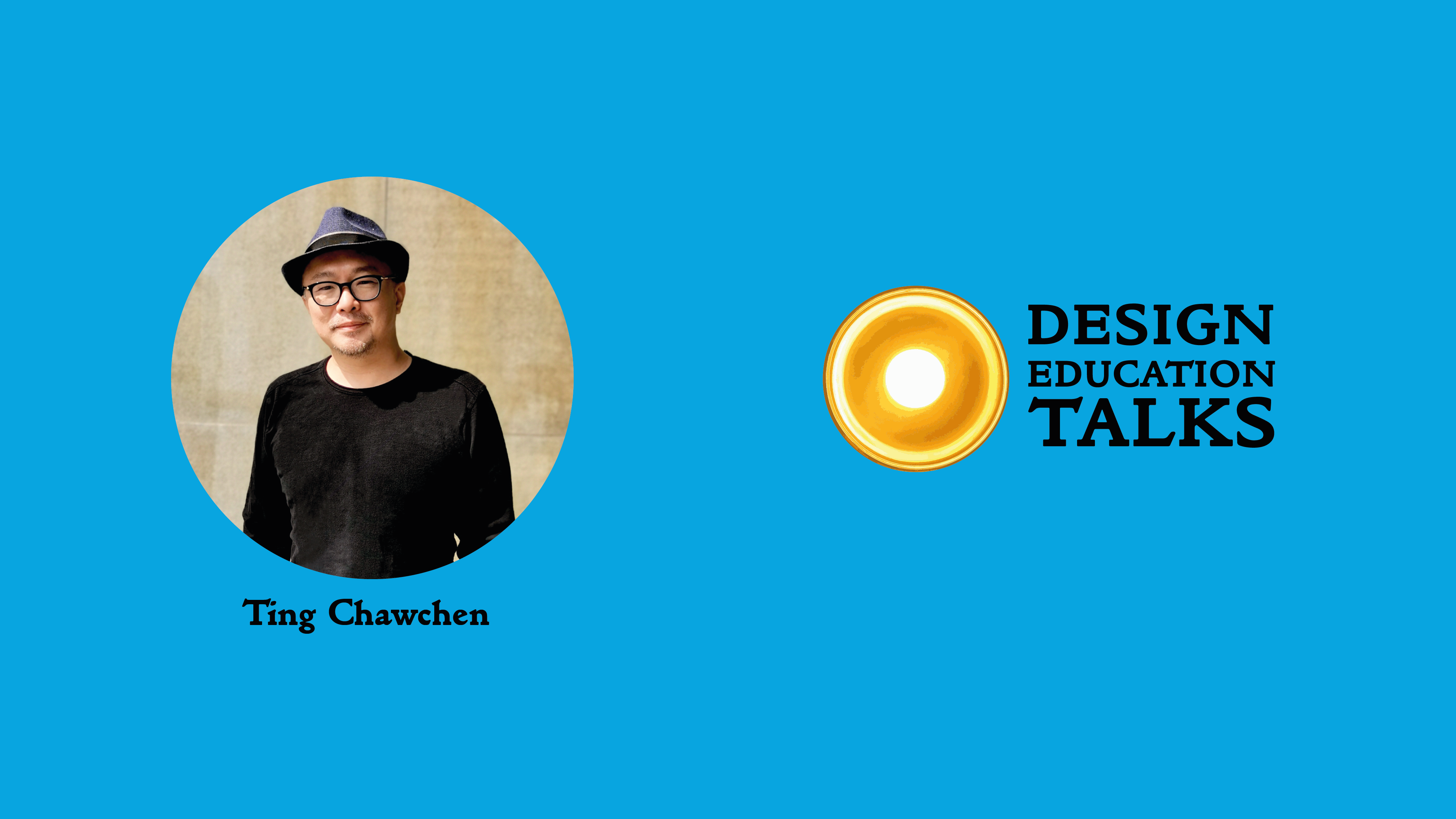
Design Education Talks Ep. 72 – Prof. Ting Chawchen

Paul Blackburn on Design Education, Studio Culture and the Loss of Depth – Design Education Talks

In this episode of Design Education Talks, I speak with Paul Blackburn, founder of Studio Blackburn, about what really forms a designer beneath the surface of projects, portfolios and professional success. This is a conversation about studio culture, typography, process, boredom, business, AI, educational character and the slow formation of creative judgement. Paul takes us through his own journey from Barnsley College of Art and Design to Ravensbourne, Nova Scotia College of Art and Design and Central Saint Martins, each institution offering him a different philosophy of what design could be: disciplined, rhetorical, cultural, experimental, commercial and human. Through these experiences, and through his later work with major clients and young designers, he reflects on what design education once gave students through time, proximity, osmosis and studio life, and what may now be disappearing through modularisation, standardisation and the reduction of education to service delivery. At the heart of the conversation is a powerful question: how do we prepare students for professional reality without reducing them to employable operators? Paul reminds us that the studio is not a timetable, a room booking or a sequence of modules. It is an ecology of attention, conversation, discipline, making, repetition, frustration, discovery and becoming. In an age of AI, where the so-called boring junior work may disappear, this question becomes even more urgent, because hidden inside that repetitive work was apprenticeship, observation, patience and the development of judgement. This episode is not a nostalgic look backwards, but a serious invitation to rethink the future of art and design education around depth, character, human intelligence and the conditions in which young people can truly become designers. Support the showSince its inception in 2019, Design Education Talks podcast has served as a dynamic platform for the exchange of insights and ideas within the realm of art and design education. This initiative sprang from a culmination of nearly a decade of extensive research conducted by Lefteris Heretakis. His rich background, intertwining academia, industry, and student engagement, laid the foundation for a podcast that goes beyond the conventional boundaries of educational discourse.See all of our work on on https://linktr.ee/thenewartschoolFollow us on twitter at @newartschoolRead our latest articles at https://newartschool.education/and https://heretakis.medium.com/Equipment used to produce the podcast:Rodcaster pro IIRode NT1 5th generationElgato Low profile Microphone ArmMonster Prolink Studio Pro microphone cableThe rest of the equipment is here 👉https://kit.co/heretakis/podcasting
  1. Paul Blackburn on Design Education, Studio Culture and the Loss of Depth
  2. Lauren Alexander – Designing with Care, Complexity, and Responsibility
  3. Design as Experience: Ksenija Miļča on Interiors, Branding and Education
  4. The Education of Attention: Esen Karol on Design, Publishing and Joy Teaching Designers to See: A Conversation with Esen Karol
  5. Simon Collins – What Design Schools Get Wrong About the Real World

Professor Ting, Chawchen is a scholar who play a role in leading Chinese design education into the future in addressing the needs of both local and global community. His knowledge and understating come from his years of pedagogical experience in learning and working abroad, he generates international perspective to better interpret cultural differences and apply to his jobs in daily basis. He’s engagement in design practice focuses on solutions for aging, health and wellbeing in contemporary society achieved through interdisciplinary collaboration. He is the funding person of the successful global exchange initiative the Design Day Marathon initiated in 2016. This interdisciplinary design project brings together academics and students from learning institutes across the globe and has facilitated engagement in the development of innovative design solutions for significant social issues such as longevity, sustainable life and wellbeing.

Leave a Reply