

Most people do not design. They repeat.
They repeat what they have seen, what they have been rewarded for, what their tutors praised, what the industry currently desires, what the algorithm amplifies, what software makes easy, what culture has already approved. They call this creativity, but often it is only obedience with better typography.
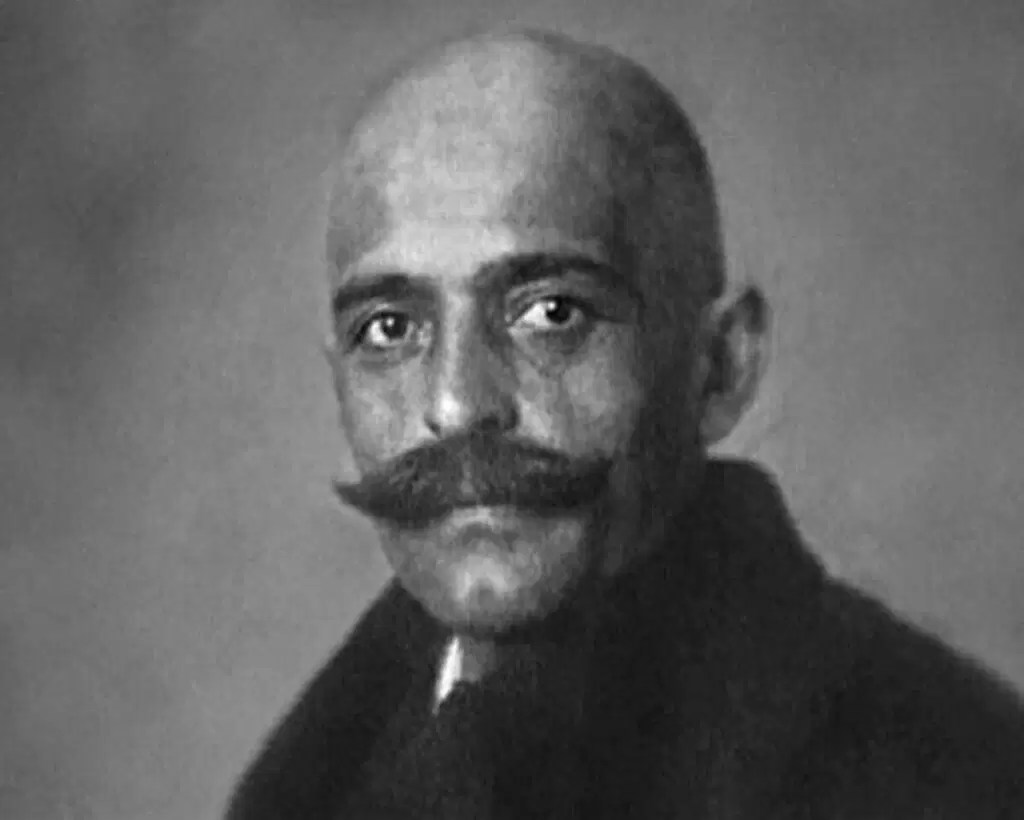
This is one of the most uncomfortable lessons that Gurdjieff offers to art and design education: human beings are not as awake as they imagine. We move through life mechanically. We react before we see. We imitate before we understand. We defend opinions we did not form ourselves. We call preferences our own when they have been installed in us by family, school, class, nation, market, platform, trend and fear.
The designer who believes they are free may simply be the most efficiently conditioned machine in the room.
This is not an insult. It is the beginning of education.
Art and design schools often speak about originality, identity, voice, authorship and personal vision. But how can a student have a voice if they have never examined the voices speaking through them? How can they create honestly if they cannot yet distinguish between perception and programming? How can they design for the world if they have not noticed how much of their world has been inherited, edited, packaged and sold back to them?
The great lie in design education is that students arrive as free creative individuals who simply need tools, techniques and employability skills. But many arrive asleep. Not because they lack intelligence, but because intelligence itself can operate mechanically. A student can be clever, stylish, fast, articulate and technically capable, while still being entirely asleep inside borrowed forms.
They know what a portfolio should look like before they know what they care about. They know how to make something look contemporary before they know how to see. They know how to use visual language before they understand what language is doing to them. They know how to generate outcomes before they have learned how to question desire.
This is where AI intensifies the problem.
AI does not create sleep. It industrialises it.
The machine can now produce endless images, endless styles, endless campaigns, endless moods, endless variations of cultural memory. It can imitate the signs of creativity with astonishing speed. It can make the student feel powerful before the student has become perceptive. It can give the appearance of process without the discipline of attention. It can produce visual sophistication without inner transformation.
And this is dangerous because the sleeping student now has a sleeping machine that dreams on their behalf.
The student types a prompt. The system returns an image. The student adjusts the image. The platform flatters the student with instant completion. But what has actually happened? Has the student seen more clearly? Have they understood form more deeply? Have they encountered resistance? Have they discovered their own limits? Have they changed as a result of making?
Or have they simply outsourced the shock of learning?
For Gurdjieff, awakening requires shock. Not trauma, not cruelty, not humiliation, but a real interruption of mechanical life. A moment when the automatic self is exposed. A moment when the person sees: I am not doing what I thought I was doing. I am not as conscious as I believed. I am full of borrowed gestures. I am performing sincerity. I am mistaking habit for truth.
Art school, at its best, should be one of these shocks.
A drawing class can be a shock because it reveals that we do not see what is in front of us. We name objects instead of perceiving form. We draw the idea of a chair, not the actual chair. We draw symbols, not relationships. We draw what we think we know, and the paper quietly tells us we have not looked.
A critique can be a shock because it reveals the gap between intention and effect. The student says, “I wanted this to feel human,” but the work feels cold. The student says, “This is political,” but the work is only fashionable. The student says, “This is personal,” but the work is composed entirely of visual clichés. The good teacher does not destroy the student. The good teacher helps the student see the lie without running away from it.
A studio can be a shock because it places students inside a living culture of comparison, friction, failure, conversation and revision. In the studio, one cannot hide so easily behind finished images. Process becomes visible. Habits become visible. Laziness becomes visible. Courage becomes visible. Taste becomes visible. The student begins to notice not only what they make, but how they make, why they avoid, where they imitate, when they pretend.
This is why art and design education must not become merely technical training. The purpose of education is not to produce smoother automatons for the creative industries. It is not to train students to operate software, satisfy briefs, follow trends and feed platforms with aesthetically competent content. That is not education. That is programming.
The real purpose of design education is de-automation.
To educate a designer is to help them wake up from the machinery inside themselves.
This means teaching students to observe before producing. To draw before generating. To question before styling. To listen before presenting. To test before believing. To notice when language is false, when images manipulate, when beauty is being used to disguise emptiness, when efficiency is replacing judgement, when speed is killing attention.
The designer must learn to distrust the first answer, especially when it looks good.
AI makes this more urgent, not less. The future designer will not be valuable because they can produce images quickly. Machines will do that endlessly. The future designer will be valuable because they can remain awake in front of images. Because they can ask what is true, what is necessary, what is humane, what is missing, what is being concealed, what is being automated, what is being surrendered.
The real danger is not that AI will think like humans.
The danger is that humans will continue thinking like machines.
When students are trained only to respond to briefs, hit deadlines, satisfy rubrics and produce polished outcomes, they become predictable. They become manageable. They become employable in the narrowest sense. But they may also become spiritually absent from their own work. They can produce design without presence. Communication without conscience. Innovation without responsibility.
This is the sleep of contemporary creative education.
It is full of activity, but little awakening. Full of outputs, but little transformation. Full of language about creativity, but often afraid of the conditions that actually produce it: silence, doubt, failure, discipline, boredom, attention, confrontation, solitude, craft, slowness, moral discomfort.
A true art school must therefore become a place where the student is not merely taught to make work, but taught to notice the machinery that makes the work through them.
What assumptions are you carrying?
Whose taste are you repeating?
What are you afraid to draw?
What do you call “my style” that is really only your algorithmic diet?
What do you call “research” that is only confirmation?
What do you call “concept” that is only decoration with vocabulary?
What do you call “authentic” that is only performance?
These questions are not secondary to design education. They are design education.
Because every poster, interface, campaign, object, image, space and system carries a model of consciousness inside it. Design is never neutral. It reveals what the designer has noticed and what the designer has failed to notice. It reveals their degree of attention. It reveals their relationship to truth. It reveals whether they are awake or asleep.
The sleeping designer decorates the existing world.
The awake designer sees the forces that produced it.
The sleeping designer asks, “What style is current?”
The awake designer asks, “What form of life does this style serve?”
The sleeping designer uses AI to avoid uncertainty.
The awake designer uses AI as a mirror, a provocation, a material to question, not an authority to obey.
The sleeping designer wants to look original.
The awake designer wants to become honest.
This is where Gurdjieff becomes strangely relevant to the future of art and design education. His language may sound mystical, severe or unfashionable, but the problem he identifies is painfully contemporary. We are surrounded by machines that promise freedom while deepening automation. We are surrounded by systems that reward reaction over consciousness. We are surrounded by images that imitate life while removing us from direct experience.
The task of the art school is to interrupt this.
Not to reject technology, but to refuse sleep.
Not to romanticise the hand, but to restore contact.
Not to worship tradition, but to recover attention.
Not to condemn AI, but to ensure that the human being does not disappear inside the prompt.
Design education must become a practice of awakening. It must help students see the lies they have inherited, the images they obey, the systems they serve, the habits they mistake for identity. It must give them shocks of perception through drawing, making, critique, dialogue, history, ethics, philosophy, material resistance and lived experience.
Only then can design become more than production.
Only then can creativity become more than variation.
Only then can AI become a tool rather than a sleep machine.
The question for the future art school is not simply: can students make better work?
The deeper question is: can they become more awake while making it?
Because the world does not need more automated creativity. It does not need more polished sleep. It does not need more beautiful lies.
It needs designers who can see.
Designers who can stop.
Designers who can remember themselves.
Designers who can make from attention rather than conditioning.
Designers who understand that the first material of design is not image, type, code, software or even the hand.
The first material of design is consciousness.
💛 Love what we do at The New Art School & Design Education Talks podcast? Help keep design education alive!
If you believe in the future of art and design education, please support the independent conversations that help shape it. We need your support to continue. https://www.buzzsprout.com/1969986/support
✨ Join our mailing list: https://sendfox.com/thenewartschool
Explore more: https://linktr.ee/thenewartschool | @newartschool| https://newartschool.education/ | https://heretakis.medium.com/ | https://odysee.com/@thenewartschool:c


