

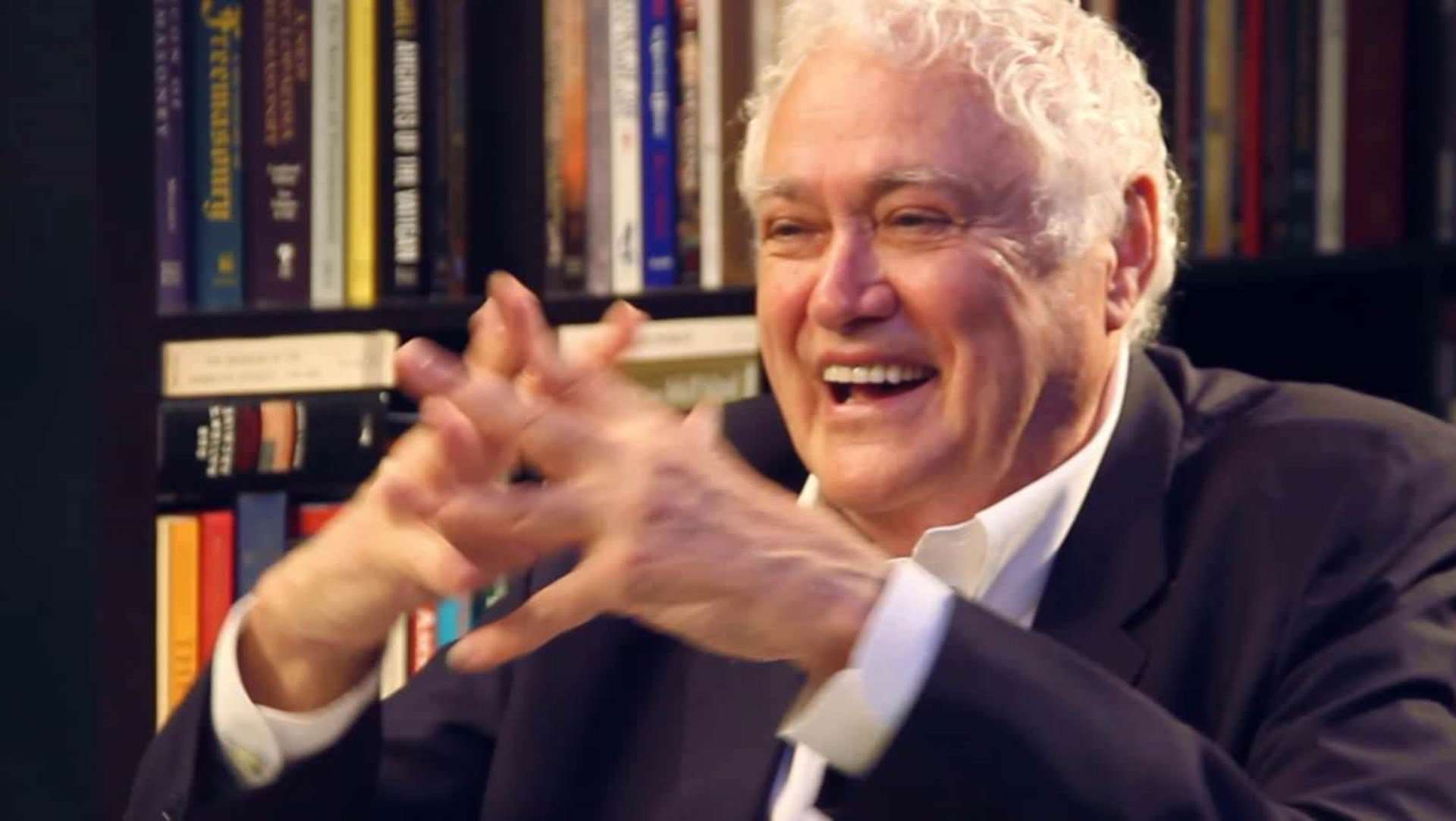
Based on a lecture given by our mentor John Taylor Gatto
The most famous discipline in the Western tradition is not a statute or a curriculum. It is a person and a practice. Jesus of Nazareth did not found a school in the modern sense. He did not set up an institution with timetables, exams, or attendance registers. He issued an invitation: “Follow me.” Some did. Some did not. There were no enrolment forms, no truancy officers, no penalties for refusal. There was only a calling and the messy, difficult human work of answering it.
If we take this model seriously as a form of education, we uncover four essential features: calling, costly commitment, interpretive independence, and embodied mastery. These are the pillars of discipleship. They are also the direct opposites of the principles that shape modern mass schooling. Where discipleship is voluntary, schooling is compulsory. Where discipleship demands costly commitment, schooling rewards short-term compliance. Where discipleship requires independence of mind, schooling standardises and tests. Where discipleship insists on a master who embodies the practice, schooling often relies on functionaries who have never practised the discipline they are paid to teach.
What happens when we exchange one model for the other? We get exactly what we have now: a school system that churns out conformity, docility, and anxiety, while smothering calling, depth, and courage.
Calling: the thing schools are built to extinguish
Calling is not a career plan given by a guidance counsellor. It is not a tick-box on a university application form. It is an inner summons, often faint and fragile, that must be nurtured through solitude, reflection, and real labour. In the Gospels, Jesus does not coerce anyone into discipleship. He offers an invitation that could be freely refused. That freedom to refuse is precisely what makes the calling real.
Modern schooling is designed to eliminate this freedom. Attendance is compulsory. Timetables are rigid. Assessment is incessant. Every hour is filled with activity. The result is that children rarely experience the quiet necessary to listen to themselves. In his book Deschooling Society, Ivan Illich argued that modern schools crowd out the possibility of genuine vocation. The young are conditioned to think of learning as a sequence of required performances rather than an adventure into calling.
A true calling often begins in solitude, sometimes through what the German educationalist Friedrich Froebel called inner necessity. It is the stirring that drives someone to paint through the night, to carve wood for hours, or to copy out texts in silence until understanding dawns. Modern schools, obsessed with group work, surveillance, and busyness, leave no space for such necessities to surface.
Commitment: the cost schools refuse to demand
When Christ called disciples, he asked for total commitment. “Leave your nets.” “Sell all you have.” “Take up your cross.” These were not metaphors for easy compliance. They meant genuine risk and real sacrifice. Discipleship was never about comfort. It required abandoning security and status.
Compare this to the modern school system. Schools reward short-term obedience: punctuality, neatness, test results. Students learn to perform for extrinsic rewards rather than to persist for intrinsic meaning. As John Taylor Gatto observed in Dumbing Us Down, modern schooling prizes shallow obedience over depth. Pupils quickly learn that the system values performance, not devotion.
True education requires the opposite. It requires what the Stoics called askesis — disciplined practice that shapes the self. It requires sweat, boredom, failure, and the humility of correction. In the medieval guild system, apprentices gave years of service under a master, enduring endless repetition of tasks before being recognised as competent. That form of commitment produced craftsmen whose skills could last a lifetime.
By contrast, modern education avoids demanding commitments. It prefers modular units, quick assessments, and frequent rewards. Nothing is asked that might cost too much. The result is fragile learners who struggle to persist once the incentives are removed.
We do not strengthen independence by protecting children from risk. We do it by giving them responsibility that matters.
Independence and self-formation: learn to think, not to parrot
Christ’s pedagogy was not a lecture circuit. He taught through parables, through actions, and through riddles. Parables are deliberately ambiguous. They cannot be reduced to one correct answer. They force the listener to wrestle, to interpret, to take a stand.
Modern schooling avoids ambiguity. It prefers standardisation. Multiple-choice tests, learning objectives, and exam boards all conspire to reduce learning to recognition and reproduction. Paulo Freire in Pedagogy of the Oppressed called this the “banking model” of education, where knowledge is deposited into passive recipients. Discipleship requires the opposite. It requires what Freire called conscientisation — the awakening of critical consciousness through dialogue and action.
Independence cannot be tested by filling in blanks. It emerges when students face real problems with no certain outcome. Medieval monastic schools knew this. Students debated in the disputatio, where positions had to be argued and defended. Renaissance humanists revived it, encouraging learners to imitate, then question, then surpass their masters. Christ’s discipleship belongs to the same lineage. It assumes that independence is the end of education, not obedience.
The master who practises what he teaches
Another essential feature of discipleship is that the master embodies the practice. Christ himself was steeped in the Jewish tradition before he began his public ministry. His authority came from practice, not position.
Modern schools often invert this. Teachers are frequently hired without sustained mastery of the disciplines they teach. A history teacher may never have produced original historical research. An art teacher may never have practised art as a profession. A literature teacher may rarely have written outside of assignments. This is not to discredit teachers, many of whom work heroically within the system, but to note the structural weakness.
In apprenticeship systems, authority flows from embodied mastery. A blacksmith, a joiner, a scholar, or a musician earns the right to teach because they practise. Their craft is visible in their hands and eyes. Students imitate a living example, not a bureaucratic role.
Small, local mentorship resists the flattening of authority that bureaucratic systems demand. It restores weight to teaching by grounding it in lived practice. It creates not functionaries but masters who embody their discipline.
Apprenticeship and the return of real work
What would schooling look like if it borrowed from discipleship? For a start, it would release adolescents from the claustrophobic schedules that attempt to fill every hour with planned activity. Instead of constant timetables, students would have blocks of time for apprenticeships in real settings: an artisan’s workshop, a design studio, a community project, or a research laboratory.
Assessment would not be private and abstract. It would be public and practical. Students would demonstrate competence by producing work visible to others: an object, a performance, a public service. Failure would be genuine but also reparable. Apprentices would learn through correction, not by chasing arbitrary grades.
The medieval guilds practised this. Apprentices worked under masters for years before presenting a masterpiece, literally a work to be judged by peers. This system produced not only skills but identity: one was a carpenter, a mason, a painter, not merely a certificate-holder.
Modern education could revive such practices. Imagine fifteen-year-olds spending months in apprenticeships, testing themselves against real demands. Imagine them producing work that their communities could see and respond to. This would form character and competence far more deeply than endless exams.
Solitude, testing, and the inner life
Modern schooling fears solitude. It packs students into crowded classrooms, fills every hour with noise, and subjects them to constant surveillance. Yet solitude is essential for calling. It is in silence that the inner summons is heard. It is in solitude that one confronts limits, doubts, and the stirrings of moral imagination.
The Romantic poets knew this. Wordsworth wrote of the “wise passiveness” of solitude in nature. The Desert Fathers of early Christianity sought solitude in the wilderness as the ground of spiritual discipline. Even the Enlightenment valued solitary study, the long hours at a desk that trained both intellect and patience.
Our schools eliminate solitude. Homework is busy work, not reflection. Devices destroy silence. The young are never alone with their thoughts. The result is generations who are uncomfortable in their own company and who confuse constant activity with meaning.
The state, the school, and the danger of monopoly
There is a political truth here. Schooling is not neutral. Large centralised systems form loyalty to abstract authority. They cannot tolerate serious rivals such as family, tradition, local custom, or faith. Discipleship, by contrast, is small, local, and diverse. It does not scale easily.
That is why modern states prefer large standardised schooling. As historian Eugen Weber showed in Peasants into Frenchmen, mass education in nineteenth-century France was explicitly designed to break local loyalties and create citizens loyal to the nation-state. Similar processes occurred in Prussia, Britain, and the United States. Schools were instruments of centralisation.
If we want citizens rather than compliant units, we must decentralise. Authority, assessment, and responsibility should not be monopolised by the state. Communities should host apprenticeships. Local masters should certify competence. Families and traditions should be partners rather than enemies of learning.
Conclusion: invite, not herd
Discipleship is not a nostalgic escape. It is a demanding, uncomfortable alternative to the managerial factories we call schools. It asks more of teachers and students alike. It risks chaos in exchange for character. It trusts the interior life instead of policing it.
If we want people who can stand alone, love honestly, and labour wisely, we must begin to invite rather than to herd. Give adolescents time to hear themselves. Give them mentors who practise the disciplines they teach. Give them work that matters. Stop confusing constant surveillance with education.
You may choose to believe that the current system evolved by accident. That is your right, right up to the moment the men with nets come to take you away. Or you can begin to relearn what discipleship has taught for two thousand years: that human formation is not measured by predictable outputs, but by the courage to follow a calling and the patience to master a craft.
References
- Illich, Ivan. Deschooling Society. Harper & Row, 1971.
- Gatto, John Taylor. Dumbing Us Down: The Hidden Curriculum of Compulsory Schooling. New Society Publishers, 1992.
- Freire, Paulo. Pedagogy of the Oppressed. Continuum, 1970.
- Weber, Eugen. Peasants into Frenchmen: The Modernization of Rural France, 1870–1914. Stanford University Press, 1976.
- Froebel, Friedrich. The Education of Man. D. Appleton and Company, 1885.
- Wordsworth, William. The Prelude. 1850 edition.

 The New Art School