

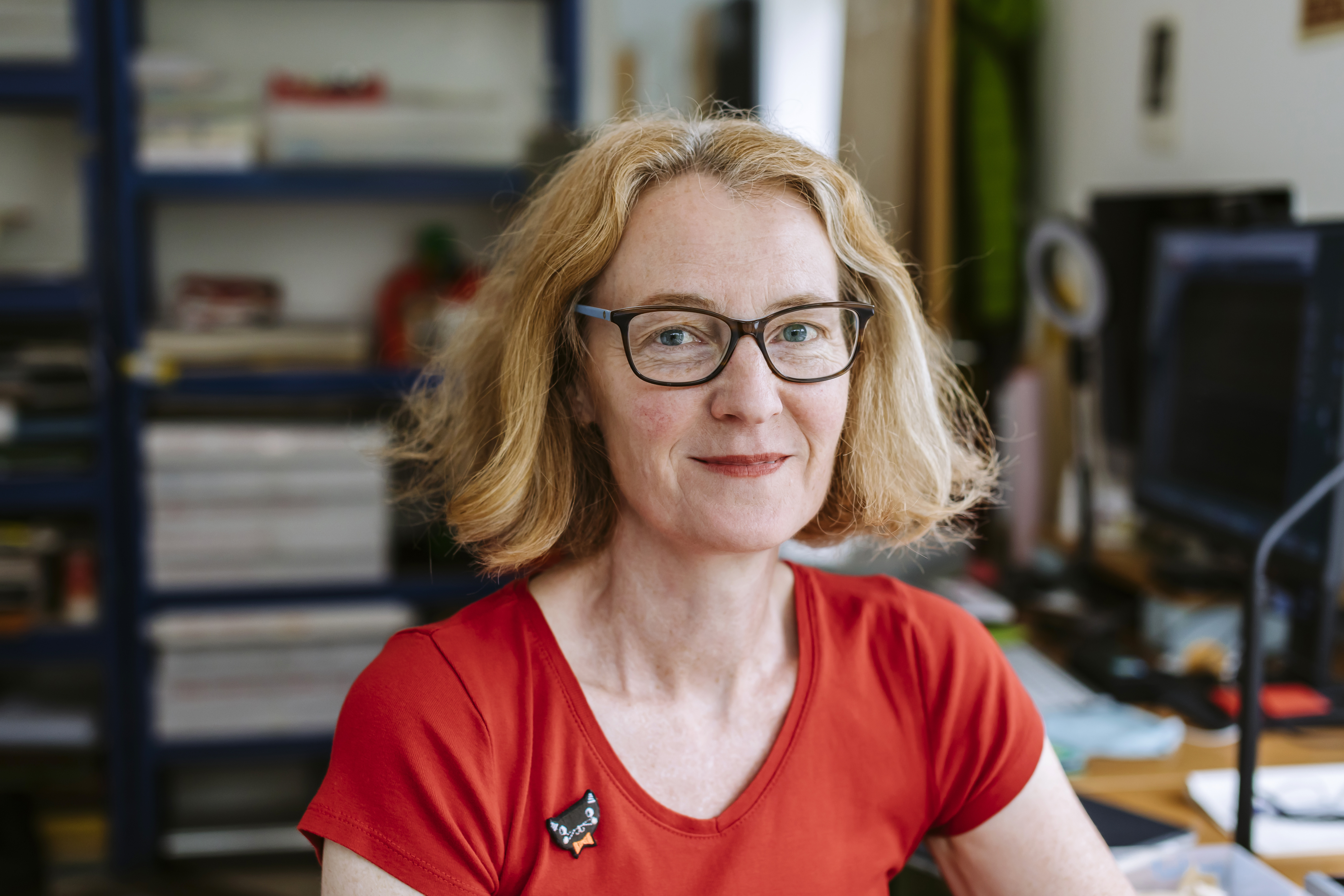
The Future of Design Education: A Conversation with Jac Batey
In a recent episode of Design Education Talks for The New Art School, I had the pleasure of speaking with Jac Batey, a distinguished educator, illustrator, and researcher. With over 25 years at the University of Portsmouth, Jac has made significant contributions to the field of illustration, both in academia and practice. Her insights into the evolving landscape of design education and creative industries shed light on the challenges and opportunities facing graduates today.
A Journey into Teaching
Jac’s entry into academia was serendipitous. Initially trained as an illustrator at Brighton University, she pursued an MA in Illustration, during which he engaged in a government scheme that facilitated retraining for employment. This initiative introduced him to digital tools like Photoshop, Illustrator and QuarkXPress, positioning her to teach these technologies at a time when digital design was gaining prominence.
Since then, Jac has played a pivotal role in shaping illustration education. In 2015, he co-founded the MA in Illustration at Portsmouth, integrating practice-based research into the curriculum. His work with zines and artists’ books, alongside her supervision of PhD students, reflects a commitment to fostering creative inquiry beyond conventional academic structures.
The Evolution of Design Education
Reflecting on the shifts in higher education, Jac highlighted the transition from polytechnics to universities, a change that redefined vocational education. Once viewed as secondary to traditional academic subjects, creative courses have had to align with research-driven models such as the Research Excellence Framework (REF). Despite progress, practice-based research still struggles for full recognition within these frameworks.
One of the most profound changes in recent years has been the impact of COVID-19. The pandemic forced educational institutions to reassess their support systems and adapt to new employment patterns. In parallel, artificial intelligence has emerged as a disruptive force in the creative industries. AI-generated content has begun replacing entry-level creative jobs, posing a challenge for graduates entering the workforce. Jac emphasised the need for adaptability: “Tools and technologies will always change, but creative problem-solving remains essential.” She advocates for an education model that prioritises critical thinking and flexibility, preparing students for careers that may not yet exist.
Challenges in the Creative Industry
Beyond academia, the creative industry has undergone dramatic shifts. Freelancers, once accustomed to remote work, found little disruption during the pandemic. However, AI’s rapid development has unsettled traditional job roles. In publishing, for example, AI-generated book covers can now be produced in minutes, undercutting freelance illustrators. Platforms like Fiverr have exacerbated the problem by driving prices down, making it difficult for creatives to sustain viable careers. Jac pointed out that illustration as a discipline has expanded far beyond its traditional confines. Graduates now find work in diverse fields, including medical communication, graphic recording, and community projects. Recognising these new opportunities is key to future-proofing careers in illustration.
Reinventing Higher Education
One of the biggest hurdles universities face is their inability to adapt quickly. Curriculums are planned years in advance, making it difficult to respond to fast-moving industry changes. Jac believes that flexibility at a local level is crucial in addressing this issue. Collaboration is another area requiring attention. Many students who experienced COVID-era isolation struggle with teamwork, a vital skill in creative professions. Universities must actively cultivate environments that foster collaboration and interpersonal skills.
Zines, Research, and Visual Storytelling
Beyond teaching, Jac has been producing the zine Future Fantastic since 1996. This visual diary captures contemporary socio-political themes, from Brexit to train strikes. Her latest issue, a collaboration with Jesse Randler from Colorado University, explores the erosion of libraries in modern society. By repurposing old library materials into new collages, the project critiques superficial support for public institutions. Her previous research has tackled mental health in higher education, particularly the passive-aggressive language used to exert pressure on students and staff. Terms like “gentle reminder emails,” “resilience workshops,” and “side hustle” often mask systemic issues, shifting responsibility onto individuals rather than addressing institutional shortcomings. Jac’s passion for zine culture extends into his teaching. At the University of Portsmouth, she helped establish Zinopolis, a growing archive of over 500 art zines, now recognised by the British Library and the Library of Congress. This collection serves as an uncensored snapshot of contemporary issues, allowing students to contribute to a living record of artistic expression.
Rethinking Assessment and the Role of Foundations
When asked what she would change about design education, Jack’s response was immediate: “I would remove assessment tomorrow!” While feedback is essential, she argues that grading creative work is counterproductive. The school system conditions students to fixate on numbers, but in professional practice, a strong portfolio outweighs a first-class degree. Jack also lamented the decline of foundation years. Previously, these preparatory courses allowed students to explore disciplines before committing to a degree. The absence of such exploratory spaces has led many students to make premature and uninformed academic choices.
Final Thoughts: Permission to Play
Jac’s closing advice to students and educators was simple yet powerful: “Permission to play!” The pressure to produce perfect work stifles creativity. Experimentation, risk-taking, and even failure are integral to artistic development. By challenging the culture of constant assessment, we can rediscover the joy of making and learning. For those interested in exploring Jack’s work, her website jackBatey.com hosts his zines and the Zinopolis archive. She is also active on Instagram as BateyJack, at least until the platform becomes unusable!
Our conversation reaffirmed that design education is at a crossroads. As AI, economic pressures, and shifting employment landscapes reshape the industry, institutions must prioritise adaptability, collaboration, and critical thinking. The future belongs to those who embrace change, and educators like Jac Batey are leading the charge.
Batey is the founder and curator of the UoP Artzine collection, Zineopolis, a research hub comprising over 500 art zines from various countries and creators, including student contributions. This resource serves as a valuable teaching tool—incorporating dedicated zine modules—and also supports staff research in both conceptualisation and dissemination. Zineopolis was recognised as an impact case study in REF21, with a summary available in the REF database.
https://results2021.ref.ac.uk/impact/c0a91c3b-24a9-44ff-a300-6a31df3eb088?page=1
The main Zineopolis site is here
https://zineopolis.blogspot.com/p/about-collection.html
You can see my practice here:
https://jacbatey.com/
This site also links to specific sites on artists books (Damp Flat Books)
https://dampflat.blogspot.com/p/artists-books.html
And Zines (Future Fantasteek!)
www.futurefantasteek.com
Recent project Paper Cuts
Future Fantasteek no.22 and touring exhibition, collages about language we use to bully each other, especially in the workplace.
https://jacbatey.com/drawing/
What I’m working on now – You Love Libraries
Collaboration with Jessy Randall (US poet) about the value of libraries and books.
To be a dos-a-dos zine of two poems that will be gifted to libraries in the UK and US.
https://jacbatey.com/work-in-progress/
https://results2021.ref.ac.uk/impact/c0a91c3b-24a9-44ff-a300-6a31df3eb088?page=1
The main Zineopolis site is here
https://zineopolis.blogspot.com/p/about-collection.html
If you’re vibing with what we do at The New Art School & Design Education Talks podcast 🎙️ and it’s helped or inspired you, consider supporting the project 💛 Even small donations go a long way → https://www.buzzsprout.com/1969986/support
Let’s keep design education alive & thriving! 🙌 #DesignEducation #SupportCreators
Where to Find More
Since its inception in 2019, Design Education Talks podcast has served as a dynamic platform for the exchange of insights and ideas within the realm of art and design education. This initiative sprang from a culmination of nearly a decade of extensive research conducted by Lefteris Heretakis. His rich background, intertwining academia, industry, and student engagement, laid the foundation for a podcast that goes beyond the conventional boundaries of educational discourse. Support the Show 👉https://www.patreon.com/thenewartschool Equipment used to produce the podcast: 👉https://kit.co/heretakis/podcasting See our work on 👉https://linktr.ee/thenewartschool Follow us on twitter at 👉@newartschool Read our latest articles at 👉https://heretakis.wordpress.com/ and 👉https://heretakis.medium.com/ and 👉 https://odysee.com/@thenewartschool:c

 The New Art School