

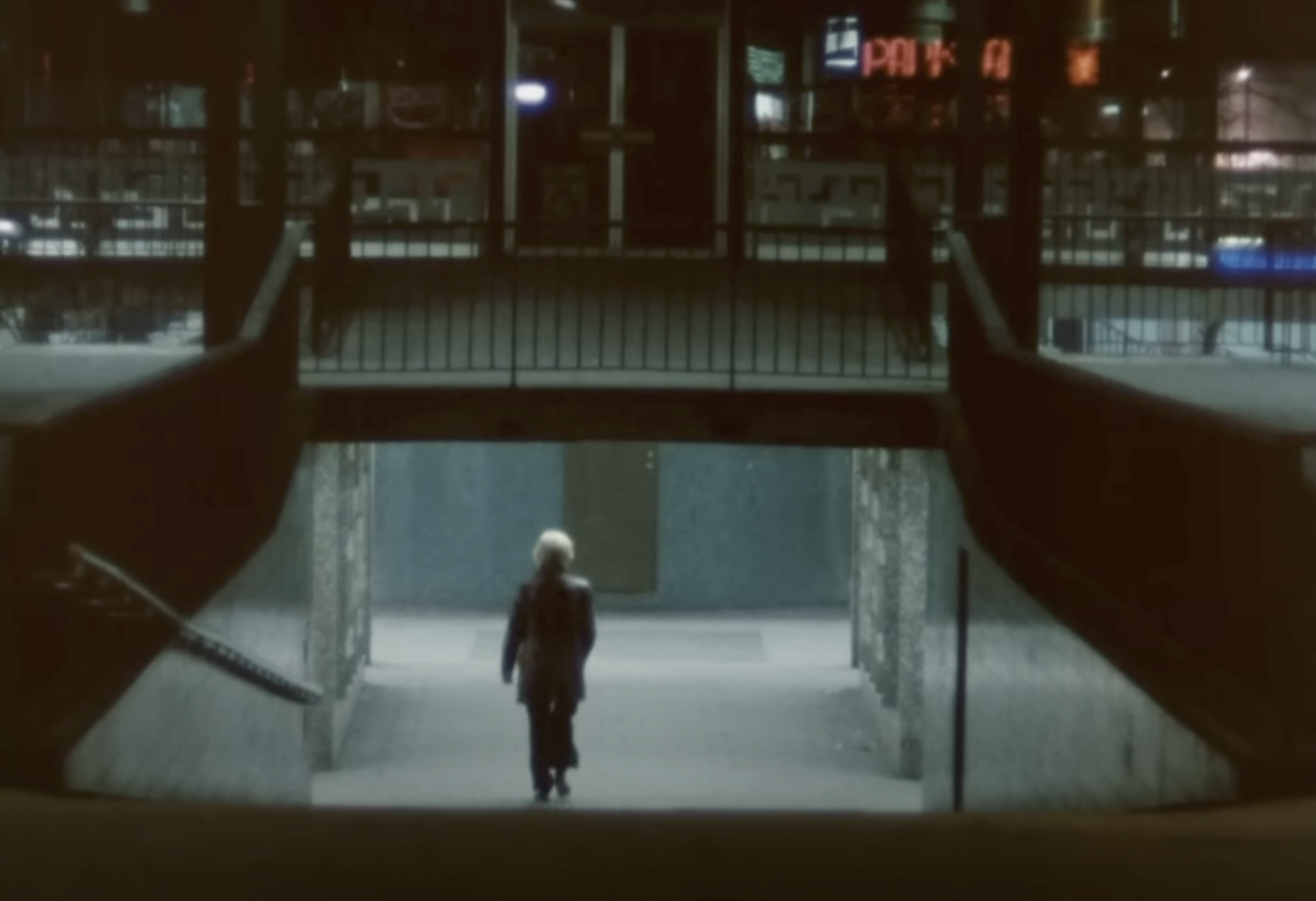
“Everything felt unmoored.”
In this extraordinary episode of Restless Entertainment, Marina Hyde and Richard Osman welcome their first-ever guest, the iconoclastic filmmaker Adam Curtis, for a conversation that dives headlong into his latest work, Shifty, a series of archival documentaries tracing 40 years of British social and emotional history. As with much of Curtis’s oeuvre, from The Century of the Self to Can’t Get You Out of My Head, Shifty is not just a documentary series but a meditation on what it feels like to live in a collapsing narrative.
From the very beginning, the tone is as unconventional as Curtis’s films. Osman jokes about forgetting his own name in the excitement of introducing a guest widely regarded as a “maverick genius.” And as Curtis settles in, so too does the sense that this will not be a neat Q&A, but a jagged, poetic discussion about feelings, media, political memory, and the decay of shared meaning.
A Social History of Feeling, Not Just Fact
At its core, Shifty is Curtis’s attempt to chart not just political and economic transformations from 1980 onwards, but the shifting internal worlds of people, their emotions, self-perceptions, and unspoken anxieties. It is, as Curtis puts it, about “what it felt like” to live through this period.
He sees Shifty as beginning with a feeling: a pervasive dread of the future, a sense that the people in charge “don’t know what they’re doing,” and that the accumulated detritus of culture has piled up, blocking forward motion. “It’s as if the past is pulling into a station and piling up,” he says. So he set out not to impose a thesis but to trace this emotional arc backward, to its roots in the late 1970s, and then follow it forward into our current cultural stagnation.
That journey begins not with Ghost Town by The Specials, a track overused in documentaries about Thatcher-era Britain, but with The Land of Make-Believe by Bucks Fizz. Curtis insists the song, written by Pete Sinfield, is not just a pop anthem but a veiled critique of Thatcherism. It’s typical of Curtis: finding meaning in the overlooked, and using pop culture as a conduit for deeper cultural truths.
Mood as Method: Documentary as Emotional Collage
Curtis’s films are often described as “hypnotic,” “dreamlike,” or “trippy,” a quality that arises from his unique editing style. He fuses high theory and low culture, using music not as underscore but as emotional argument, making films that feel like conversations in a pub after midnight, politics, psychology, pop music, and memory all jumbled together.
This approach, Curtis explains, is deliberate: “That’s how my friends and I spoke. I thought, ‘Why not make films like that?’” In doing so, he rejected the tidy taxonomies of traditional current affairs broadcasting in favour of a mode truer to lived experience, fragmented, nonlinear, ambiguous.
Yet his work is far from incoherent. The juxtapositions serve a purpose. The now-viral clip of an “intersex dog” on daytime TV, for example, is not just comic relief, it becomes an emblem of the shifting fluidity of identity, of social change emerging beyond the control of those who thought they were steering it.
Never Trust a Liberal: The Failure of the Middle Class
A key thread in Shifty is Curtis’s ongoing critique of liberalism, particularly of the British liberal intelligentsia. He suggests that the liberal classes, those who once saw themselves as caretakers of “the less well-off”, reacted with contempt and disbelief when large swathes of the working class began voting for Thatcher. That betrayal, he argues, led liberals to retreat into cultural policing, language, representation, and identity, as their last sphere of influence.
“Never trust a liberal,” Curtis says with blunt finality, arguing that their real failure was not moral, but imaginative: they could not articulate a compelling vision for the future. The Millennium Dome, featured in Shifty, becomes a metaphor for this emptiness, a monument of ambition devoid of content, its designers unable to imagine anything meaningful at its heart.
Melancholy, Technology, and the Collapse of Authenticity
One of the most striking observations Curtis offers concerns the impact of smartphones and the internet on documentary footage itself. In trawling the archives for Shifty, he noticed that around 1998, before the rise of social media, people began to appear less real on camera. “You saw the genuine self receding,” he says. Performative self-consciousness became the norm, and people’s “inner selves” began to disappear.
This is not just an aesthetic problem; for Curtis, it represents a profound shift in subjectivity. “We now live in a world where everything looks normal, but in a heightened, pantomime way,” he argues, linking this to the rise in disorders like bulimia, conditions where internal chaos is hidden beneath external presentation.
It’s part of what he sees as a new mode of power, one based not on control, but on extraction. Social media, ticket platforms, and politics alike operate by pulling emotions, attention, and money out of individuals, who are left isolated and emotionally depleted. It is no longer about what you experience, but what can be taken from you.
The Need for a New Language of the Real
Curtis is deeply sceptical of current political discourse. Politicians, he argues, behave like actors in archive footage, they talk in the language of the 20th century, despite living in an entirely different world. “They don’t have a map,” he says. They cannot explain why people feel so anxious, disoriented, and melancholic.
This lack of language, he suggests, is the central problem of our time, and where real change must begin. As he and Osman reflect on Christopher Clark’s Revolutionary Spring, about the 1848 uprisings in Europe, they draw a powerful parallel. That was a moment when everything felt fluid, uncertain, and unequal, but it also gave rise to new political imaginations, like the birth of realism in literature. Could we be at such a juncture again?
Curtis believes a generational reaction is coming, not necessarily from leaders, but from young people raised in the absurd performativity of digital life. “This will one day look old,” he says. He’s not nostalgic for the past, but he believes something is brewing in people’s heads, some unarticulated revolution. What’s needed, he insists, is not a technocratic solution but a poetic one, someone who can “overwhelm” the present system with imaginative language that speaks to people’s internal realities.
Conclusion: Documenting the End of Something
Adam Curtis does not offer solutions. He refuses the role of prophet. But what Shifty and his other films do is provide a mirror to the “tectonic plates” shifting beneath the everyday. He evokes mood, melancholy, confusion, dread, but never wallows in it. Instead, he compels viewers to ask: what was that all about?
His hope is that people, after watching, will feel not that they were lectured, but that they were part of something strange, thrilling, and unfinished. “You lived through something extraordinary,” he says. “And we don’t yet know what it means.”
Reframing Reality: Adam Curtis, the Archive, and the Melancholy of Now
“Everything felt unmoored.”
In this extraordinary episode of Restless Entertainment, Marina Hyde and Richard Osman welcome their first-ever guest, the iconoclastic filmmaker Adam Curtis, for a conversation that dives headlong into his latest work, Shifty, a series of archival documentaries tracing 40 years of British social and emotional history. As with much of Curtis’s oeuvre, from The Century of the Self to Can’t Get You Out of My Head, Shifty is not just a documentary series but a meditation on what it feels like to live in a collapsing narrative.
From the very beginning, the tone is as unconventional as Curtis’s films. Osman jokes about forgetting his own name in the excitement of introducing a guest widely regarded as a “maverick genius.” And as Curtis settles in, so too does the sense that this will not be a neat Q&A, but a jagged, poetic discussion about feelings, media, political memory, and the decay of shared meaning.
A Social History of Feeling, Not Just Fact
At its core, Shifty is Curtis’s attempt to chart not just political and economic transformations from 1980 onwards, but the shifting internal worlds of people, their emotions, self-perceptions, and unspoken anxieties. It is, as Curtis puts it, about “what it felt like” to live through this period.
He sees Shifty as beginning with a feeling: a pervasive dread of the future, a sense that the people in charge “don’t know what they’re doing,” and that the accumulated detritus of culture has piled up, blocking forward motion. “It’s as if the past is pulling into a station and piling up,” he says. So he set out not to impose a thesis but to trace this emotional arc backward, to its roots in the late 1970s, and then follow it forward into our current cultural stagnation.
That journey begins not with Ghost Town by The Specials, a track overused in documentaries about Thatcher-era Britain, but with The Land of Make-Believe by Bucks Fizz. Curtis insists the song, written by Pete Sinfield, is not just a pop anthem but a veiled critique of Thatcherism. It’s typical of Curtis: finding meaning in the overlooked, and using pop culture as a conduit for deeper cultural truths.
Mood as Method: Documentary as Emotional Collage
Curtis’s films are often described as “hypnotic,” “dreamlike,” or “trippy,” a quality that arises from his unique editing style. He fuses high theory and low culture, using music not as underscore but as emotional argument, making films that feel like conversations in a pub after midnight, politics, psychology, pop music, and memory all jumbled together.
This approach, Curtis explains, is deliberate: “That’s how my friends and I spoke. I thought, ‘Why not make films like that?’” In doing so, he rejected the tidy taxonomies of traditional current affairs broadcasting in favour of a mode truer to lived experience, fragmented, nonlinear, ambiguous.
Yet his work is far from incoherent. The juxtapositions serve a purpose. The now-viral clip of an “intersex dog” on daytime TV, for example, is not just comic relief, it becomes an emblem of the shifting fluidity of identity, of social change emerging beyond the control of those who thought they were steering it.
Never Trust a Liberal: The Failure of the Middle Class
A key thread in Shifty is Curtis’s ongoing critique of liberalism, particularly of the British liberal intelligentsia. He suggests that the liberal classes, those who once saw themselves as caretakers of “the less well-off”, reacted with contempt and disbelief when large swathes of the working class began voting for Thatcher. That betrayal, he argues, led liberals to retreat into cultural policing, language, representation, and identity, as their last sphere of influence.
“Never trust a liberal,” Curtis says with blunt finality, arguing that their real failure was not moral, but imaginative: they could not articulate a compelling vision for the future. The Millennium Dome, featured in Shifty, becomes a metaphor for this emptiness, a monument of ambition devoid of content, its designers unable to imagine anything meaningful at its heart.
Melancholy, Technology, and the Collapse of Authenticity
One of the most striking observations Curtis offers concerns the impact of smartphones and the internet on documentary footage itself. In trawling the archives for Shifty, he noticed that around 1998, before the rise of social media, people began to appear less real on camera. “You saw the genuine self receding,” he says. Performative self-consciousness became the norm, and people’s “inner selves” began to disappear.
This is not just an aesthetic problem; for Curtis, it represents a profound shift in subjectivity. “We now live in a world where everything looks normal, but in a heightened, pantomime way,” he argues, linking this to the rise in disorders like bulimia, conditions where internal chaos is hidden beneath external presentation.
It’s part of what he sees as a new mode of power, one based not on control, but on extraction. Social media, ticket platforms, and politics alike operate by pulling emotions, attention, and money out of individuals, who are left isolated and emotionally depleted. It is no longer about what you experience, but what can be taken from you.
The Need for a New Language of the Real
Curtis is deeply sceptical of current political discourse. Politicians, he argues, behave like actors in archive footage, they talk in the language of the 20th century, despite living in an entirely different world. “They don’t have a map,” he says. They cannot explain why people feel so anxious, disoriented, and melancholic.
This lack of language, he suggests, is the central problem of our time, and where real change must begin. As he and Osman reflect on Christopher Clark’s Revolutionary Spring, about the 1848 uprisings in Europe, they draw a powerful parallel. That was a moment when everything felt fluid, uncertain, and unequal, but it also gave rise to new political imaginations, like the birth of realism in literature. Could we be at such a juncture again?
Curtis believes a generational reaction is coming, not necessarily from leaders, but from young people raised in the absurd performativity of digital life. “This will one day look old,” he says. He’s not nostalgic for the past, but he believes something is brewing in people’s heads, some unarticulated revolution. What’s needed, he insists, is not a technocratic solution but a poetic one, someone who can “overwhelm” the present system with imaginative language that speaks to people’s internal realities.
Conclusion: Documenting the End of Something
Adam Curtis does not offer solutions. He refuses the role of prophet. But what Shifty and his other films do is provide a mirror to the “tectonic plates” shifting beneath the everyday. He evokes mood, melancholy, confusion, dread, but never wallows in it. Instead, he compels viewers to ask: what was that all about?
His hope is that people, after watching, will feel not that they were lectured, but that they were part of something strange, thrilling, and unfinished. “You lived through something extraordinary,” he says. “And we don’t yet know what it means.”
If this resonated, share it with someone who still believes imagination matters. Or better yet, create. Not for the market. But for the world.
If you’re vibing with what we do at The New Art School & Design Education Talks podcast 🎙️ and it’s helped or inspired you, consider supporting the project 💛 Even small donations go a long way → https://www.buzzsprout.com/1969986/support
Let’s keep design education alive & thriving! 🙌 #DesignEducation #SupportCreators
Where to Find More
Since its inception in 2019, Design Education Talks podcast has served as a dynamic platform for the exchange of insights and ideas within the realm of art and design education. This initiative sprang from a culmination of nearly a decade of extensive research conducted by Lefteris Heretakis. His rich background, intertwining academia, industry, and student engagement, laid the foundation for a podcast that goes beyond the conventional boundaries of educational discourse. Support the Show 👉https://www.patreon.com/thenewartschool Equipment used to produce the podcast: 👉https://kit.co/heretakis/podcasting See our work on 👉https://linktr.ee/thenewartschool Follow us on twitter at 👉@newartschool Read our latest articles at 👉https://heretakis.wordpress.com/ and 👉https://heretakis.medium.com/ and 👉 https://odysee.com/@thenewartschool:c

 The New Art School