

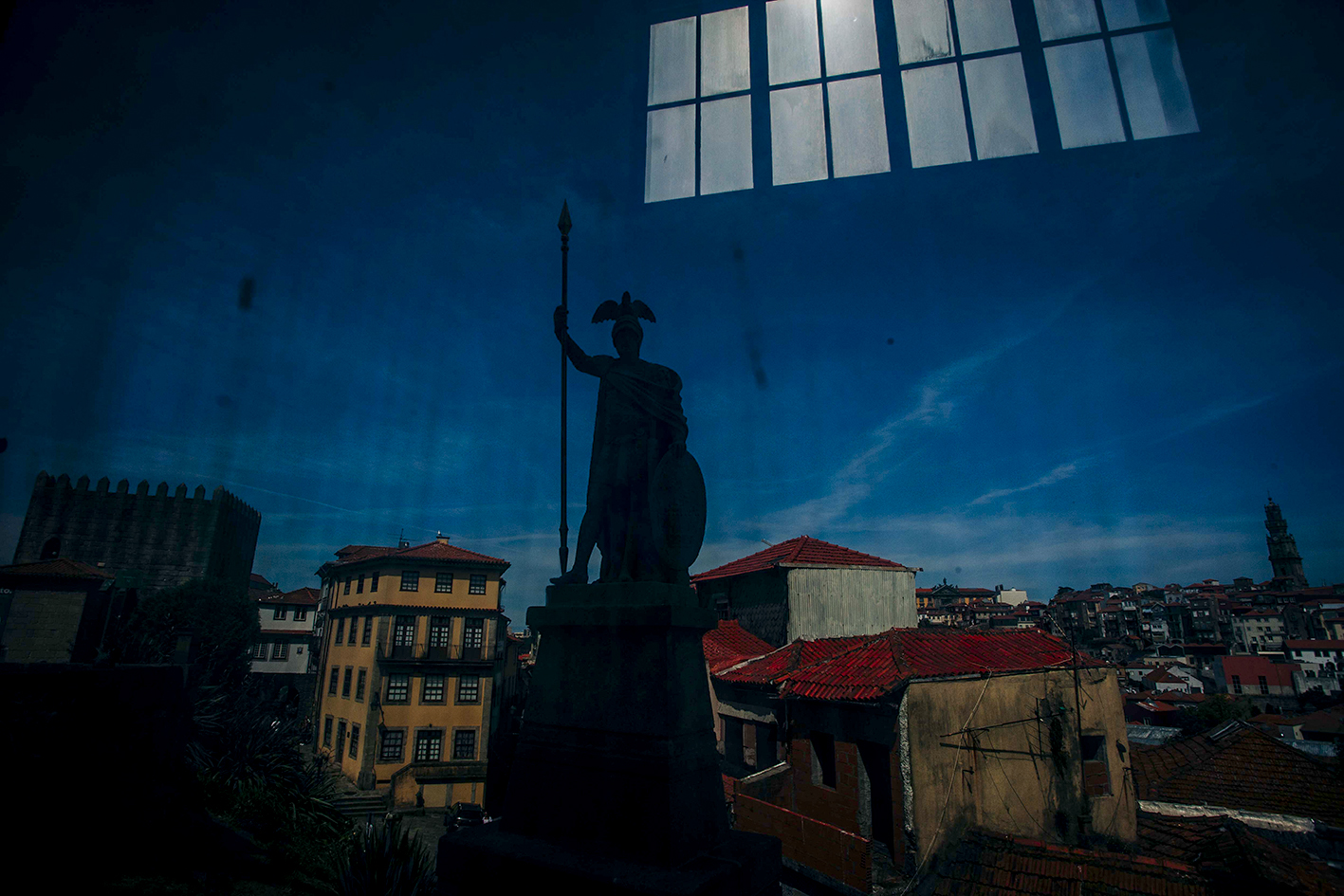
A Broken Mirror
We are in serious trouble. This is not rhetorical flair. It is not the alarmism of an academic or activist shouting into the void. It is the quiet, steady recognition that something essential has broken, not only in our political and economic systems, but in our cultural and spiritual lives.
Billionaires ascend into orbit while workers drown in burnout. Authoritarianism creeps forward not with boots and batons, but with algorithms and euphemisms. Entire cities are unaffordable. Whole generations feel unnecessary. The future reads like a corporate memo, impersonal, templated, already pre-approved by a board of stakeholders.
How did we get here?
This did not emerge from a single event, election, or crash. It is the outcome of decades of structural erosion: of public life, of ethical imagination, and of human meaning. We have arrived at a point where systems, particularly capitalism, have become so naturalised, so omnipresent, that they feel invisible. And among these, none is more dominant, more deified, than the market.
The God of the Market
In our present world, capitalism is no longer just an economic system. It is a totalising worldview, a civil religion without liturgy, but with plenty of commandments.
It governs how we measure worth. It shapes how we design schools. It defines what we call success, and more insidiously, who is allowed to succeed.
As John Ruskin warned in Unto This Last, “There is no wealth but life.” Yet we have created an economy that feeds on life, commodifying attention, extracting labour, monetising creativity. We no longer ask whether a thing is good or beautiful or necessary. We only ask: is it scalable?
Once, societies could imagine multiple modes of organising life: communal, spiritual, artistic, agrarian, even feudal. Today, we live under monoculture, a one-size-fits-all logic of market discipline dressed up as freedom.
And here lies the most dangerous myth: that capitalism is not only efficient, but inevitable. That to critique it is to regress. But as John Taylor Gatto once said, the purpose of education should not be to conform to existing systems, but to challenge them: “School is a twelve-year jail sentence where bad habits are the only curriculum truly learned.” If we are to escape this sentence, we must unlearn. We must remember.
From Culture to Content
Nowhere is this crisis more visible than in our relationship to art and culture.
Art, once a sacred means of reckoning with truth and beauty, has been rebranded as “content.” Artists have been rebranded as “creatives.” And creativity itself has been reduced to a commodity, not a calling, but a strategy.
Today, we do not ask whether a film or poem dares, but whether it fits into a franchise. McDonald’s used to be the metaphor for standardisation. Now it’s Disney, Netflix, Instagram. Aesthetics have become the domain of advertising. Rebellion has become a marketing asset.
Ruskin wrote: “Great nations write their autobiographies in three manuscripts, the book of their deeds, the book of their words, and the book of their art.” But what are we writing now? Brand decks? Pitch decks? Content calendars?
The artist used to be a seer, a rebel, a prophet. Today, the artist is often asked to be a strategist, a curator of sponsored identity. The studio has become a start-up. Art school, a gateway to LinkedIn. And yet, beneath this glossy surface, the embers of resistance remain.
What Happened?
To be clear, this is not a nostalgic longing for communism, nor a utopian yearning for golden ages that never were. Even a broken alternatives offer the gift of contrast.
But even a broken alternative offers the gift of contrast.
Today, there is no contrast. Capitalism has won not by argument, but by attrition. Its greatest triumph is that it appears natural. It has taken the place of nature, of God, of the commons.
And this is the real crisis: imaginative poverty. The inability to conceive of a world beyond metrics and margins. As Mark Fisher wrote, “It’s easier to imagine the end of the world than the end of capitalism.” In education, we’ve trained generations to become consumers and competitors, not creators and citizens.
Gatto warned us that the modern school system was never designed to create free thinkers. Its origins lie in producing obedient workers, not radical artists. “The truth is that schools don’t really teach anything except how to obey orders,” he wrote. So, where do we turn, when even education betrays imagination?
The Artist’s Role in a Culture of Crisis
We turn to the artist. Not the “content creator.” Not the influencer. The artist.
The artist as seer, dissenter, rebel, healer. The artist as one who notices what has been hidden and gives it form. The artist as the last voice that hasn’t been bought.
It is not the artist’s job to entertain. It is the artist’s job to reveal.
To reveal the cracks in the system. To reveal the cost of our silence. To reveal, urgently, that this world is not the only world possible.
We need not more “creatives” who fit the feed. We need cultural agents, strange, difficult, principled, visionary, who rupture the norms.
Ruskin again: “The work of the artist is to teach people to see.”
Today, we are blindfolded by convenience. We must teach each other to see again.
The Risk of Speaking
Let’s not pretend it is easy. To speak against the dominant logic is to risk exclusion, marginalisation, or the cold stare of market indifference. Artists who challenge power are often labelled as “angry,” “irrelevant,” or “unmarketable.” But the risk of not speaking is greater.
Silence is not neutral. It is compliance.
And that compliance, that cultural passivity, is killing us. It is killing our communities. It is killing our attention. It is killing the very possibility of art that matters.
We cannot meet this moment with silence. We must meet it with form, with fire, with voice.
Toward a New Imagination
We are in deep trouble. But trouble is not the end.
Trouble is the beginning of transformation, if we are willing to face it with eyes open and tools in hand.
We need new myths that are not made by corporations. We need new schools that teach thought, not obedience. We need studios that resist, not studios that brand.
We need artists who ask not “what will sell?” but “what must be said?”
The truth is this:
The world is not working. Capitalism is not inevitable. Another world is possible, but it won’t emerge from platforms or profits. It will emerge from the studio, the classroom, the street. It will emerge from you.
A Closing Word
There is no one manifesto that will save us. No single image, slogan, or essay.But there is a path, and it begins with refusal.
Refuse the algorithm. Refuse the franchise.
Refuse the template.Pick up your brush. Your pen. Your camera. Your code. Reclaim your voice, your awkwardness, your fire.
Let’s begin again, not with a brand, but with a question:
What if art could still change the world?
If this resonated, share it with someone who still believes imagination matters. Or better yet, create. Not for the market. But for the world.
If you’re vibing with what we do at The New Art School & Design Education Talks podcast 🎙️ and it’s helped or inspired you, consider supporting the project 💛 Even small donations go a long way → https://www.buzzsprout.com/1969986/support Let’s keep design education alive & thriving! 🙌 #DesignEducation #SupportCreators
Where to Find More
Since its inception in 2019, Design Education Talks podcast has served as a dynamic platform for the exchange of insights and ideas within the realm of art and design education. This initiative sprang from a culmination of nearly a decade of extensive research conducted by Lefteris Heretakis. His rich background, intertwining academia, industry, and student engagement, laid the foundation for a podcast that goes beyond the conventional boundaries of educational discourse. Support the Show 👉https://www.patreon.com/thenewartschool Equipment used to produce the podcast: 👉https://kit.co/heretakis/podcasting See our work on 👉https://linktr.ee/thenewartschool Follow us on twitter at 👉@newartschool Read our latest articles at 👉https://heretakis.wordpress.com/ and 👉https://heretakis.medium.com/ and 👉 https://odysee.com/@thenewartschool:c

 The New Art School